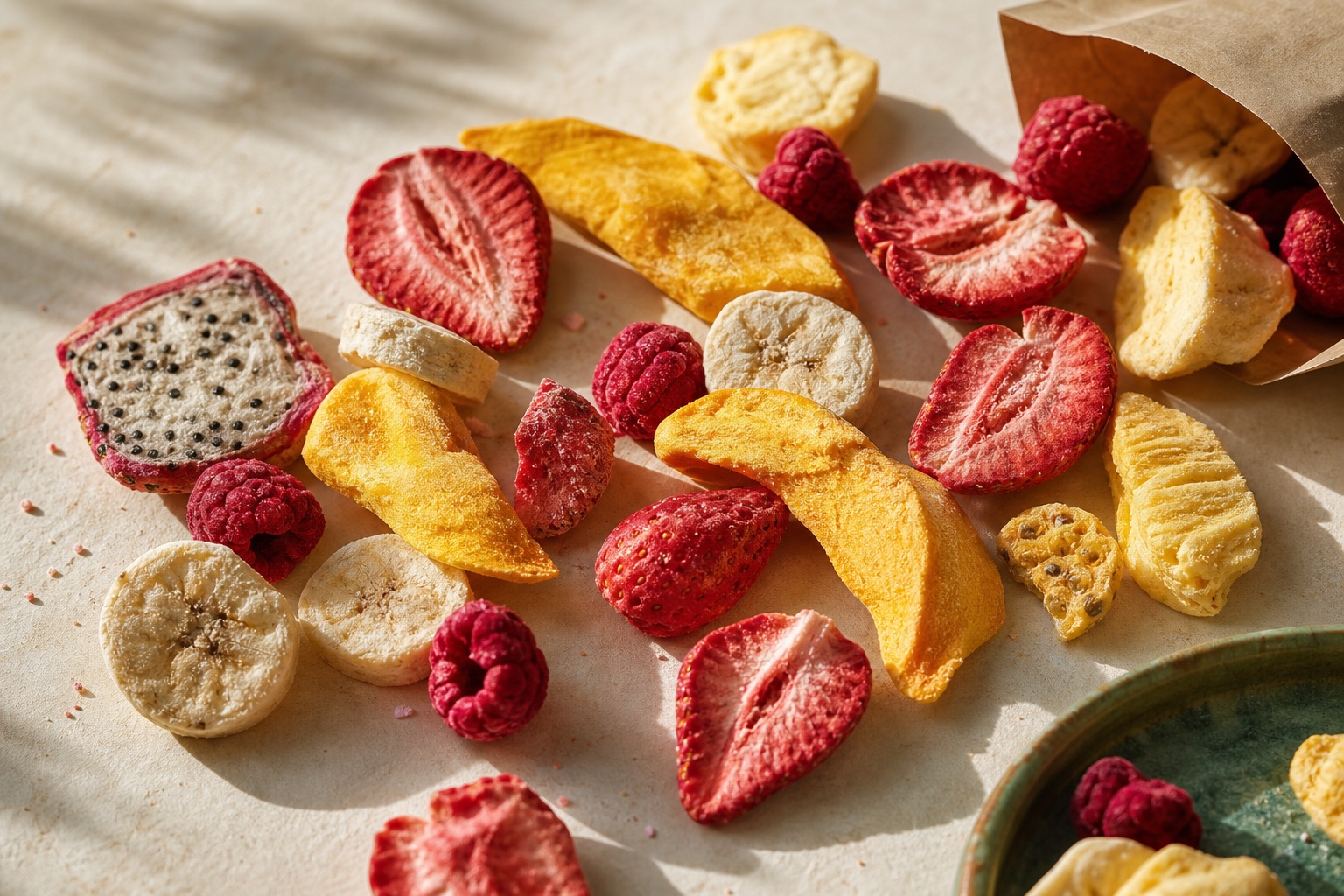
Freeze-dried fruit is fruit with most of its water removed at low temperature under vacuum. The result is light, porous, and crisp—very different from the chewy texture many shoppers associate with conventional dried fruit.
What freeze-drying does
The process starts by freezing the food. Under reduced pressure, frozen water can move from ice to vapor without first becoming liquid—a change called sublimation. Removing water this way creates the airy structure behind the signature crunch.
Because water contributes most of fresh fruit’s weight and volume, the finished snack is much lighter. That makes it portable and shelf-stable when sealed from moisture, but it also means a small-looking portion can represent more fresh fruit than its size suggests.
For what happens after drying, see why crisp foods soften, including what texture experiments can and cannot tell you about an opened bag.
Freeze-dried vs. conventionally dried
Both formats remove water. The practical difference is the experience: freeze-dried fruit is usually crisp and airy, while heat-dried fruit is often dense and chewy. Either format may be sold with only fruit as the ingredient, or with sweeteners, oils, preservatives, seasonings, or coatings—so the format alone does not tell you the full ingredient story.
For process, portion, use, and ingredient tradeoffs side by side, read Freeze-Dried vs. Dried Fruit: What Actually Changes?
Turn the bag over. Look at the ingredient list and the Added Sugars line rather than relying on “fruit snack,” “natural,” or front-of-pack imagery.
Nutrition needs context
Removing water concentrates what remains by weight. Comparing 100 grams of fresh fruit with 100 grams of freeze-dried fruit can therefore be misleading for a real snack decision: their volumes and typical portions are radically different. Compare the serving you will actually eat, and remember that the Nutrition Facts panel reflects the packaged form.
Total Sugars includes sugars naturally present in fruit. Added Sugars identifies sugars introduced during processing. A package with “0g Added Sugars” can still list Total Sugars because fruit itself contains sugar.
If that distinction is what brought you here, our added-sugar guide includes a 20-second package check and three common label patterns.
Freeze-dried fruit is not a hydration substitute for fresh fruit. It can, however, be a convenient way to bring fruit flavor and a crisp texture into situations where fresh fruit is awkward to store or carry.
Judge the product in front of you—not the halo around the format.
What to check before buying
- Ingredient list: Is it fruit only, or are sugar, oil, flavoring, or a coating part of the product?
- Serving size: Is the bag one serving, or are you likely to eat multiple labeled servings?
- Added sugars: Use the separate line rather than guessing from Total Sugars.
- Piece quality: Whole pieces and thick cuts can create a different experience from crumbs or powder. This is preference, not a health verdict.
- Package barrier: The product needs protection from humidity. Reseal promptly and store it in a cool, dry place.
How to use it
Eat it straight for crunch; fold it into trail mix; add it to yogurt, oatmeal, or cereal just before eating; crush it over desserts; or pair it with nuts, seeds, cheese, or yogurt when you want more staying power. Add freeze-dried fruit at the last moment around moist foods—the same porous structure that makes it crisp also pulls in water quickly.
See 12 flexible snack pairings for practical combinations, learn when powder makes more sense than pieces, use our 15-use guide when you want ideas beyond eating it straight, or review how to keep an opened bag crisp.