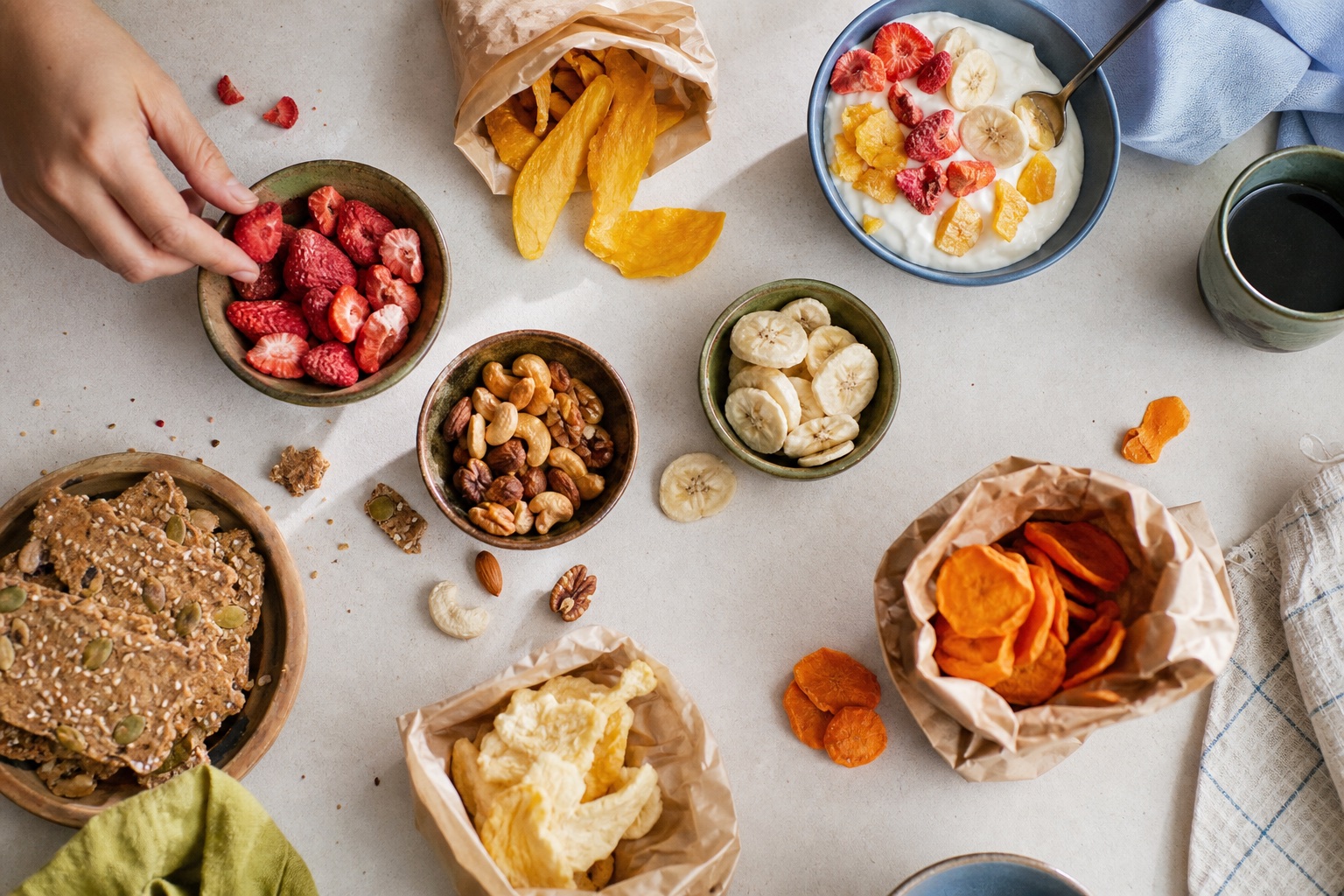
A snack does not need to be nutritionally complete. Sometimes you want an apple because an apple sounds good. But when a single fruit, cracker, or crisp snack leaves you looking for something else five minutes later, pairing can help it do a bigger job.
A flexible pairing formula
Begin with the snack’s job. For a light break, one food may be enough. To bridge several hours, combine a fruit, vegetable, or grain-based food with something that contributes protein, fat, fiber, or a mix of the three—such as yogurt, nuts, seeds, beans, eggs, or cheese.
Small randomized trials suggest that snack composition can affect later hunger and eating, but the effect is not identical for every food or person. In one crossover study, high-protein yogurt improved several appetite measures compared with equal-calorie crackers or chocolate in 20 healthy women. Almond studies have also found improved satiety or lower later intake in some settings, with other trials finding no difference in self-reported appetite. We use that evidence as a direction, not a guarantee.
Keep the snack you like. If it needs more staying power, add a partner instead of forcing the first food to do every job.
Light but useful
1. Fresh apple + sharp cheddar
Crisp, juicy, salty, and satisfying in a few bites. Slice only what you plan to eat, or keep the apple whole for less prep.
2. Cucumber or bell pepper + hummus
Hydrating crunch meets a bean-based dip. For sesame allergy, choose a tahini-free bean dip and verify the label.
3. Freeze-dried strawberries + plain yogurt
Sprinkle the fruit on immediately before eating so it stays crisp. Use dairy or an unsweetened plant-based yogurt with a protein level that fits your needs.
When the snack must bridge to a meal
4. Banana + peanut or sunflower-seed butter
Portable fruit plus a substantial spread. Sunflower-seed butter is a common nut-free direction, but school and workplace allergen rules still apply.
5. Whole-grain crackers + tuna or mashed chickpeas
Use a pouch for convenience or make a quick chickpea mash with lemon and seasoning. Check sodium if that is personally relevant.
6. Pear + roasted almonds or pumpkin seeds
A juicy, sweet base with a crunchy partner. Pumpkin seeds offer a nut-free variation where seed products are permitted.
No fridge needed
7. Freeze-dried fruit + roasted chickpeas
Two distinct crunches, sweet and savory. Keep them in separate compartments until eating if you care about each texture staying exact.
8. Unsweetened dried fruit + nuts
The classic trail pairing is compact and energy-dense. Pre-portion if eating directly from a large shared bag makes it hard to notice how much is gone.
9. Whole-grain crispbread + shelf-stable nut or seed butter
Look for a single-serve spread when mess and food safety are concerns. Pack the components separately to preserve crunch.
When what you want is something sweet
10. Dates + tahini
Rich and compact, so a little can feel like a real treat. Tahini contains sesame; use another suitable seed butter if needed.
11. Berries + ricotta or cottage cheese
Fresh fruit keeps the bowl juicy. Cinnamon, lemon zest, or cocoa can add contrast without requiring the bowl to become dessert—or preventing it from being one.
12. Freeze-dried banana + dark chocolate + peanuts
Build a small mix with deliberate proportions rather than relying on a product to decide them for you. For a nut-free version, use toasted seeds and an allergy-compatible chocolate.
Adapt the pairing to the person
For nut allergies: do not assume seeds are automatically safe, and check cross-contact statements. Follow the individual’s allergy plan.
For dairy-free eating: compare plant-based yogurt labels; protein and added sugar vary widely. Bean dips, tofu-based spreads, seeds, and eggs—if eaten—offer other directions.
For lower sodium needs: start with unsalted nuts or seeds, plain yogurt, fruit, and lower-sodium crackers or beans. Use the % Daily Value for context.
For children: choking risk, texture, piece shape, and supervision matter. Whole nuts, hard pieces, thick spoonfuls of nut butter, and dry brittle foods may be inappropriate depending on age and development. Use pediatric guidance, not an adult snack list.
For a medical nutrition target: diabetes, kidney disease, swallowing disorders, gastrointestinal conditions, and other needs can change what is appropriate. Follow your clinician or registered dietitian’s plan.
Pairing is a way to make a snack more useful—not a rule that every bite needs a nutritional chaperone.
Before buying the packaged half of a pairing, use our 60-second label scan. If freeze-dried fruit is the base, our storage guide explains why it should stay separate from moist partners until eating.
Primary references
- USDA Food and Nutrition Service: Dietary Guidelines for Americans, 2025–2030
- Nutrition Journal: High-protein yogurt snacks and appetite control, randomized crossover trial
- Nutrients: Almonds versus a high-carbohydrate snack, randomized crossover study
- Nutrients: Almonds versus an isoenergetic baked snack, randomized trial