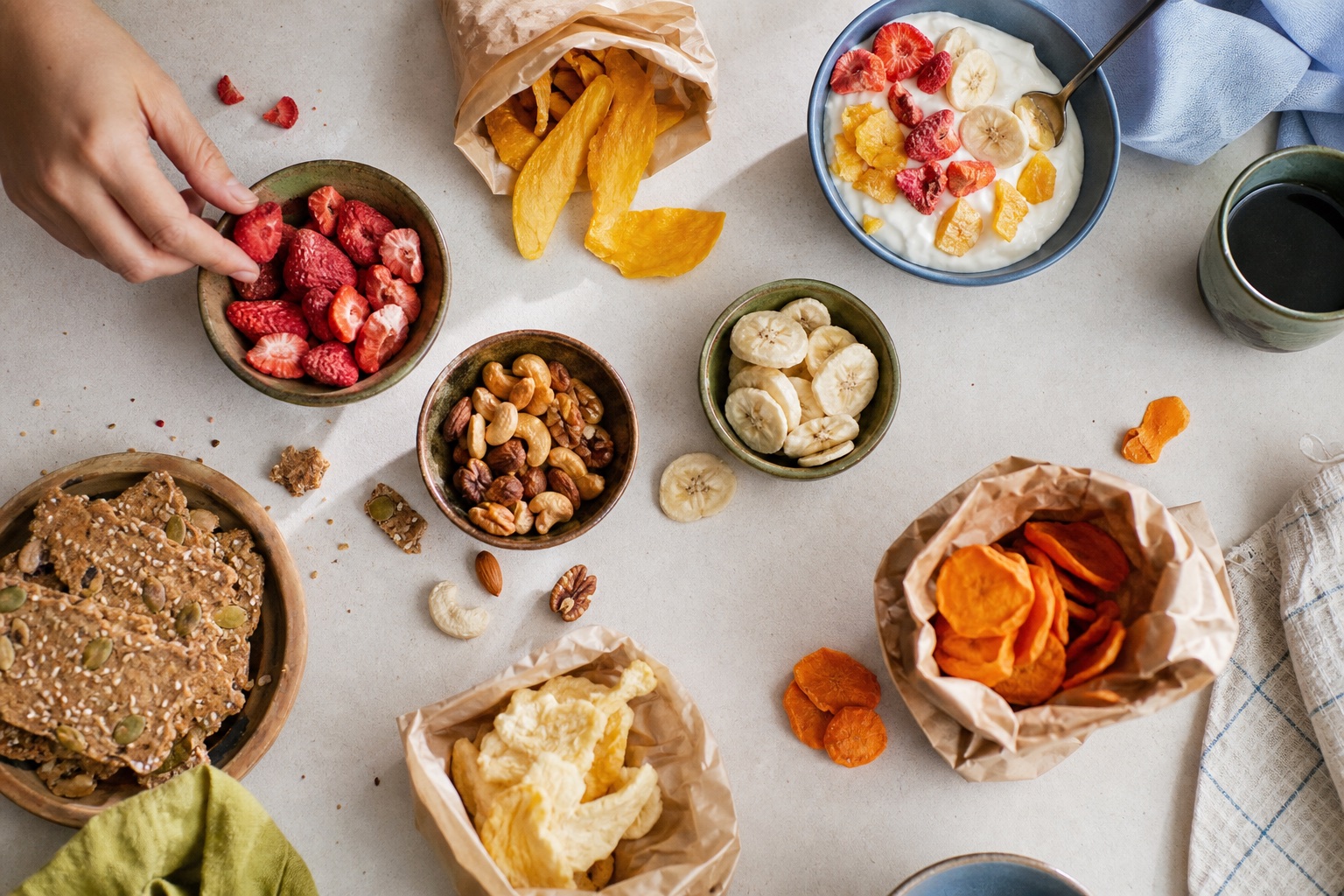
If fresh fruit works for the moment, it is hard to beat: it comes with its original water, familiar structure, and no package to decode. Freeze-dried fruit solves a different set of problems. It is light, crisp, and easy to keep on hand where fresh fruit might bruise, leak, spoil, or be unavailable.
The useful answer
Choose fresh fruit when you want hydration, a larger-feeling portion, minimal processing, or the pleasure of the fruit in season. Choose freeze-dried fruit when portability, shelf stability, low mess, or crunch makes fruit more likely to happen. You can use both without pretending they are identical.
A handful of fresh strawberries and a handful of freeze-dried strawberries can represent very different amounts of original fruit. Start with the serving on the package.
Removing water changes the eating experience
Fresh fruit is largely water. Freeze-drying removes most of that water after the fruit is frozen, leaving an airy network behind. The product becomes much lighter and more brittle. That is why a small bag can hold what began as a visually surprising amount of fruit.
The missing water matters. Fresh fruit contributes fluid and usually requires more chewing for a given amount of dry matter. Freeze-dried fruit dissolves quickly, creates a loud crunch, and does not replace a drink. If you are thirsty, choose water; do not ask a dry snack to do hydration’s job.
Portions, calories, and natural sugar
Removing water does not create new fruit sugar. It concentrates the fruit’s existing solids by weight. One hundred grams of freeze-dried fruit therefore contains far more original fruit than 100 grams of fresh fruit. That is why gram-for-gram comparisons can make the dried form look unusually high in sugar or calories without explaining how people actually portion it.
Use three pieces of information together:
- Labeled serving size: the reference amount for every number on the panel.
- Total Sugars: natural fruit sugar plus any added sugar.
- Added Sugars: the amount introduced during processing.
Plain fruit can show Total Sugars and 0g Added Sugars. Our added-sugar guide walks through the exact check.
What happens to nutrients?
No preservation method holds every component perfectly still. Freezing, oxygen exposure, storage time, light, pretreatments, fruit variety, and process conditions can all influence the result. Freeze-drying’s low-temperature, low-pressure approach often retains color, shape, and several heat-sensitive compounds better than hot-air drying in controlled studies, but retention varies by nutrient and fruit.
Fresh fruit also changes after harvest and during storage. This is why broad statements such as “all nutrients are preserved” or “processed fruit has no nutrition” are both unhelpful. For a packaged product, the Nutrition Facts label can tell you about nutrients required or voluntarily declared; it cannot capture every plant compound.
Fiber is not water, so plain freeze-dried whole-fruit pieces generally retain fruit fiber, though the exact amount per serving depends on the fruit, whether skins or seeds were removed, and the serving size. A powder or juice-derived product may be structurally different from a whole-fruit piece.
The real-life tradeoffs
Waste and reliability
Fresh fruit can be economical when it is in season, eaten before it spoils, and available where you shop. A shelf-stable option can reduce household waste when plans are unpredictable. The better value is not just price per ounce; it is price per portion you actually use. Our price-comparison guide shows the shelf math step by step.
Portability and mess
Freeze-dried fruit does not bruise or leak, but it can crush into crumbs. Fresh fruit may need washing, refrigeration, a peel, or a container. The winning format depends on whether you are packing a school bag, commuting, serving a bowl at home, or traveling.
If portability is the deciding factor, our travel-and-lunchbox guide shows how to keep freeze-dried fruit crisp without confusing it with the cold-storage rules for the rest of the meal.
Packaging
Fresh fruit may be sold loose. Freeze-dried fruit depends on a high-barrier package to keep humidity out. Smaller packs can reduce repeat exposure but create more material per ounce of food. We treat that as a real tradeoff, not a footnote.
Texture and accessibility
Some people strongly prefer crisp food; others find dry, brittle pieces difficult. Dental needs, swallowing safety, age, sensory preferences, and individual care guidance matter more than a generic ranking.
Choose by situation
Breakfast at home: fresh berries add water and softness; freeze-dried berries add crunch if sprinkled on immediately before eating.
Desk drawer or emergency snack: a sealed freeze-dried pack is predictable and light. Pair it with nuts, seeds, roasted chickpeas, or another substantial food if the fruit alone will not carry you far.
Hot day outdoors: fresh fruit can contribute fluid, but safe storage still matters. If freeze-dried fruit is easier to carry, bring water with it.
Seasonal pleasure: eat the ripe peach. Shelf-stable fruit is useful, but it does not need to replace the experience of fresh produce.
Food waste is the problem: keep both. Buy fresh in an amount you can finish and use the sealed option as backup.
The best fruit format is often the one you can store, afford, enjoy, and actually eat.
For a broader process comparison, continue with Freeze-Dried vs. Dried Fruit. Once a bag is open, use our crunch-preserving storage guide.