Freeze-dried fruit can go bad. A correctly processed, unopened commercial package can be shelf-stable, but shelf-stable does not mean sterile or permanent. Problems can begin with contamination before packaging, a failed seal, a puncture, moisture entering after opening, pests, or poor storage.
At home, the useful distinction is between a quality change—such as less crunch—and a warning sign that should end the evaluation. You cannot reliably detect every foodborne pathogen with your senses, so good handling, intact packaging, recall information, and manufacturer instructions matter alongside appearance and smell.
What freeze-drying changes—and what it does not
Freeze-drying removes frozen water through sublimation in a vacuum. Low water activity limits the water available for microbial growth and many deterioration reactions. That is central to shelf stability.
But preventing growth is different from killing every organism. FDA states that freezing and drying do not kill Salmonella, and its research describes the organism's ability to survive in low-moisture environments. Commercial safety therefore depends on the full process: raw-material controls, sanitation, validated processing, environmental control, packaging, and distribution—not on dryness alone.
After opening, the dry, porous fruit can reabsorb moisture. That often changes texture first. Enough moisture, a contaminated utensil, or an unsealed package can also undermine the conditions the product was designed to maintain.
Discard it when you find these warning signs
- Visible mold. Do not pick off one affected piece and keep the rest. FDA's safest consumer practice is to discard moldy food.
- Condensation or unexpected wet patches. Water inside a product meant to stay very dry signals that its storage conditions changed.
- Insects, larvae, webbing, or insect residue. FDA inspection methods recognize insect damage and storage infestation as defects in dried fruit.
- A torn, punctured, swollen, or unsealed package. If the protective barrier failed before you opened it, do not assume the printed date still describes the product.
- A distinctly off or fermented odor. Familiar fruit aroma can vary; an unexpected spoilage odor is a reason to stop.
- A recall matching the brand, product, lot, or date. Follow the recall instruction even when the food looks normal.
Do not taste a questionable piece to decide. Save the package and lot information if you need to contact the manufacturer, then discard or return the product as directed.
What if it only lost its crunch?
Softness alone often indicates moisture uptake and quality loss. It is not proof of mold, and it is not proof of safety. Evaluate the full history: Was the bag left open? Did a wet hand enter it? Is there condensation, odor, discoloration that is unusual for that fruit, package damage, or a recall?
When softening is the only change and the product has been handled according to its label, the fruit may still work as an ingredient where crispness is unnecessary. Our storage guide explains why humidity changes texture. If you are deciding how long to keep an open package, use our after-opening guide.
We do not recommend using an oven or dehydrator to “make questionable food safe.” Heating may change texture, but an improvised treatment does not erase an unknown contamination history.
What does the best-by date tell you?
USDA explains that “Best if Used By” generally communicates expected quality, not an automatic safety cutoff. It also notes that product characteristics, packaging, distribution time, and storage temperature influence how manufacturers determine quality dates.
That does not mean the date should be ignored. It is useful product-specific information, especially while the original package remains unopened and intact. Once the package is opened or damaged, your handling and storage conditions become part of the outcome. Follow any separate after-opening instruction on the label.
A date also cannot overrule evidence of a problem. Moldy fruit should be discarded before its best-by date, while a correctly stored product does not become visibly different at midnight merely because a quality date passed.
How to prevent avoidable problems
- Buy packages with intact seals and no punctures.
- Store them in a cool, dry, dark place away from pests and cleaning chemicals.
- Use clean, dry hands, bowls, scoops, and containers.
- Keep steam, sink spray, wet spoons, and yogurt-covered fingers out of the bag.
- Clean powder from the zipper and close the entire track immediately.
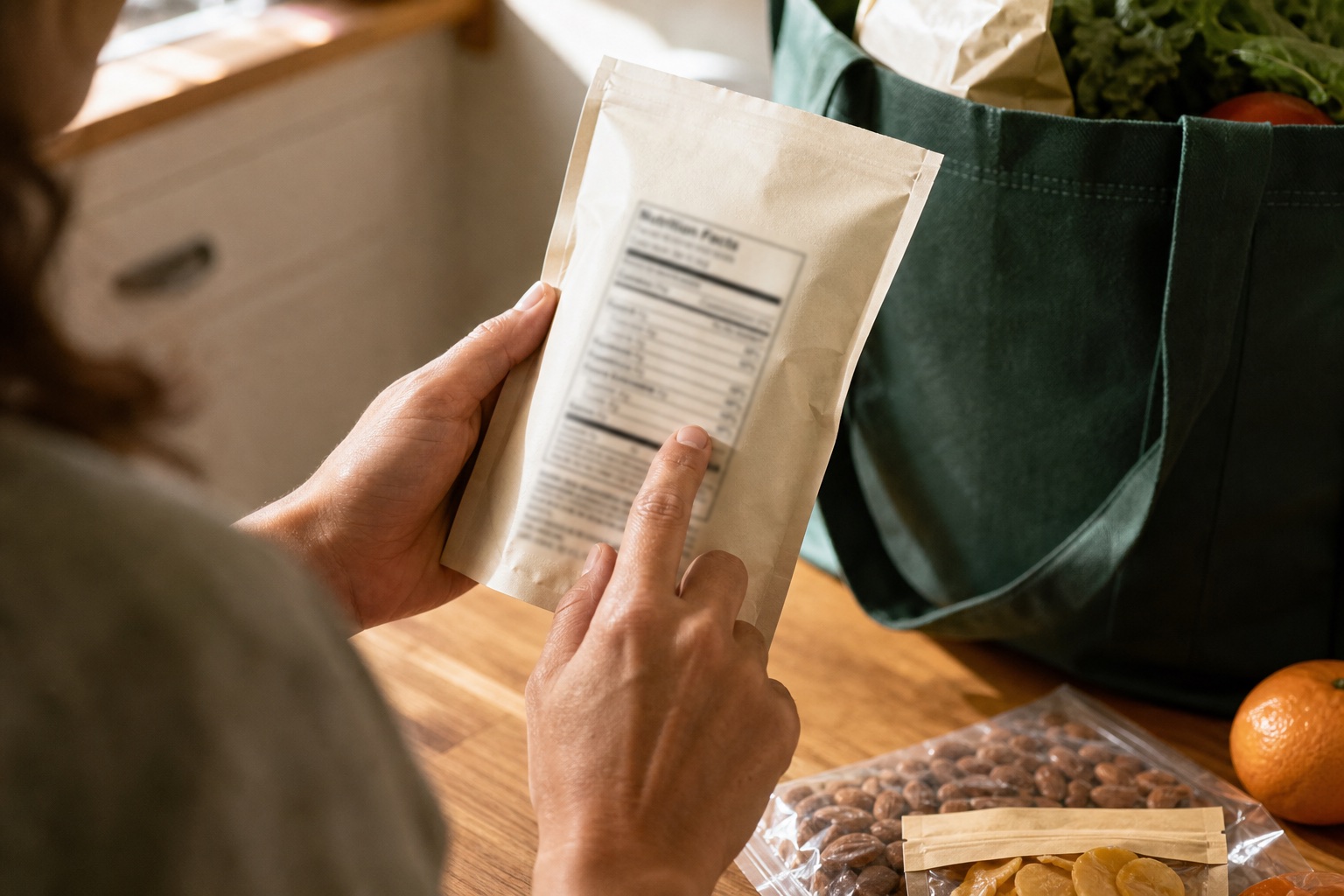
- Keep the product name, lot code, and manufacturer contact information until the bag is finished.
- Check FDA recalls and safety alerts when a concern involves a specific product.
Freeze-drying changes the environment microbes need to grow. It does not replace safe processing, intact packaging, or good handling.
To understand what the label can tell you before purchase, use our 60-second label scan. For a broader category overview, read Freeze-Dried Fruit, Decoded.